Stocky App Is Shutting Down — Here's What to Do Next
By Andrew Simpson
Quick answer
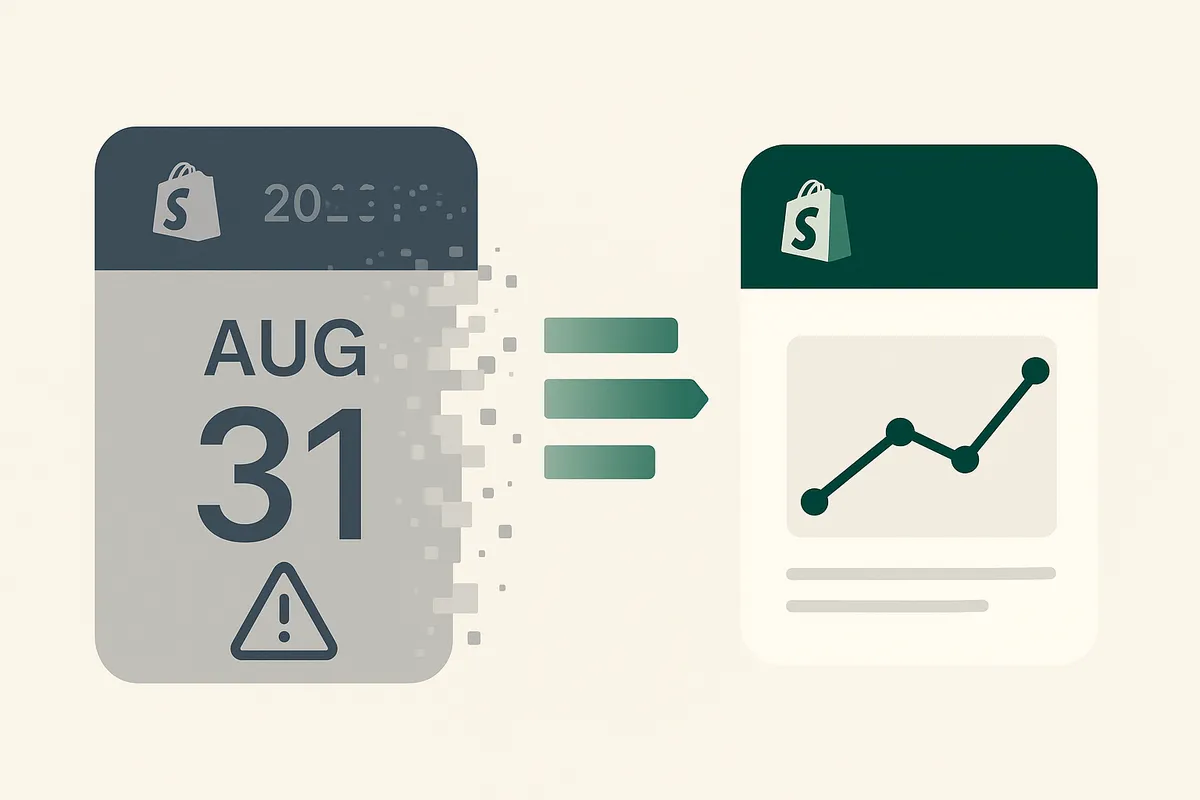
Shopify is retiring the Stocky app on 31 August 2026. All purchase orders, transfers, and demand forecasting features inside Stocky will stop working after that date. If you rely on Stocky for inventory management, you need to export your data and migrate to a replacement app before the deadline. The best alternatives are Canopy, Inventory Planner, and Prediko — but the right choice depends on your SKU count, supplier complexity, and budget.
What is actually happening with Stocky
Shopify acquired Stocky in 2019 and bundled it free with every Shopify plan. For years, it was the default purchase order and demand forecasting tool for Shopify merchants. It worked — barely. The interface hadn't been meaningfully updated since acquisition, the demand forecasting was rudimentary (it used simple linear extrapolation, not seasonal modelling), and it couldn't handle multi-location inventory properly. In early 2026, Shopify confirmed what many expected: Stocky would be fully deprecated by 31 August 2026. After that date, the app will be removed from all stores. Your historical purchase order data inside Stocky will no longer be accessible unless you export it beforehand.
Why this matters more than you think
If you're running a Shopify store with more than a few hundred SKUs, losing Stocky means losing the only free tool that handled purchase orders natively inside Shopify. The Reddit threads on r/shopify are full of merchants who relied on Stocky for years and are now scrambling. The most common complaints: "I have 2,000 POs in Stocky and no way to bulk export them." "The demand forecasting was terrible but at least it existed." "I can't justify paying £300/month for Inventory Planner when Stocky was free." These are valid concerns. But here's the uncomfortable truth: if Stocky was your entire inventory management system, you were already operating with significant blind spots. Stocky couldn't calculate weeks cover. It couldn't flag dead stock proactively. It didn't account for supplier lead times in its reorder suggestions. You were making purchasing decisions with incomplete data.

Real example: how Bailey & Coco managed with Stocky
Bailey & Coco is a dog accessories brand on Shopify with 2,845 active SKUs across 152 pattern variants. They source from China with a 70-day production lead time and 120-day sea freight window. That's nearly 200 days from placing a purchase order to receiving stock in their UK warehouse. With Stocky, they could create purchase orders and see basic sales velocity. But Stocky's demand forecasting didn't account for the 190-day total lead time. It would suggest reordering when stock was already critically low — by which time it was 6 months too late. The result: Bailey & Coco regularly experienced stockouts on their best-selling collar patterns in Q4, while simultaneously sitting on 8+ months of slow-moving seasonal lines they'd over-ordered in Q1. The total cost of this mismanagement — calculated from lost sales on stockouts plus the carrying cost of excess inventory — was roughly £47,000 per year. Stocky wasn't causing the problem. But it wasn't preventing it either.
Stop guessing when to reorder
Canopy gives Shopify brands the inventory clarity they need to grow.
What to do right now: your migration checklist
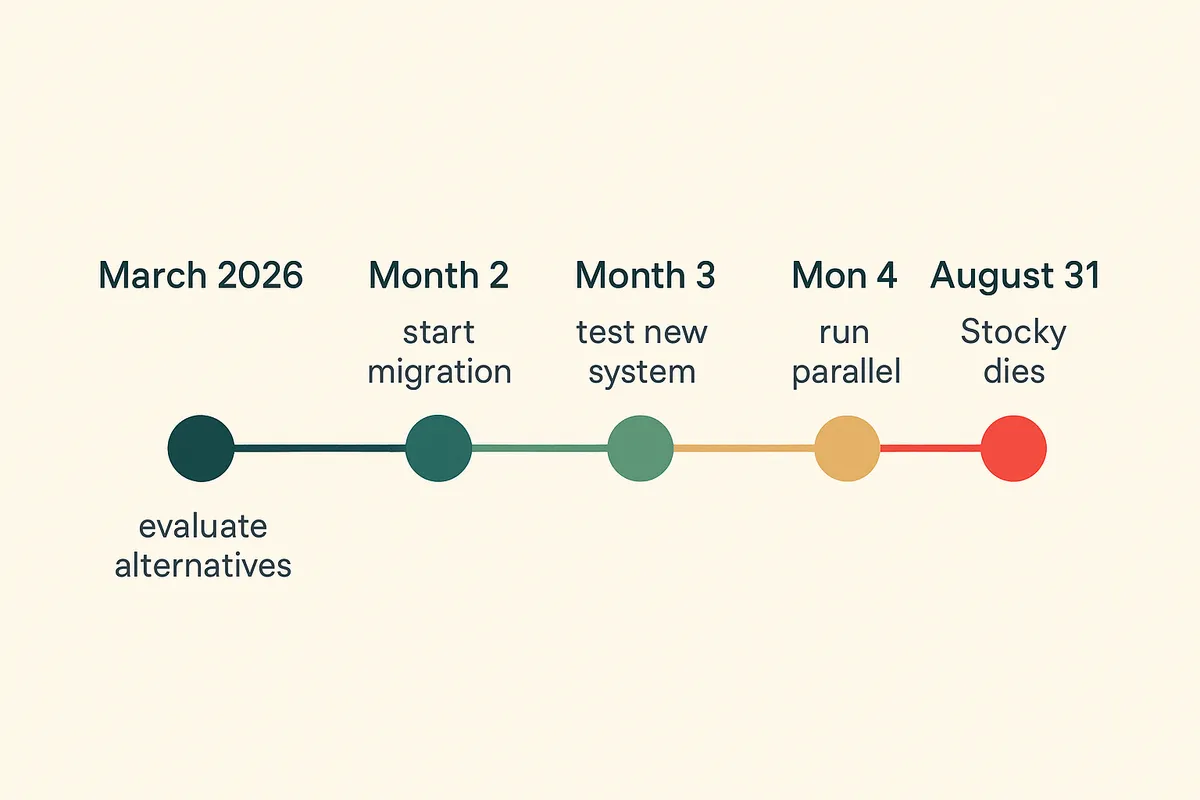
Don't wait until August. The merchants who start migrating now will have months of parallel running to verify data accuracy. Here's your step-by-step plan:
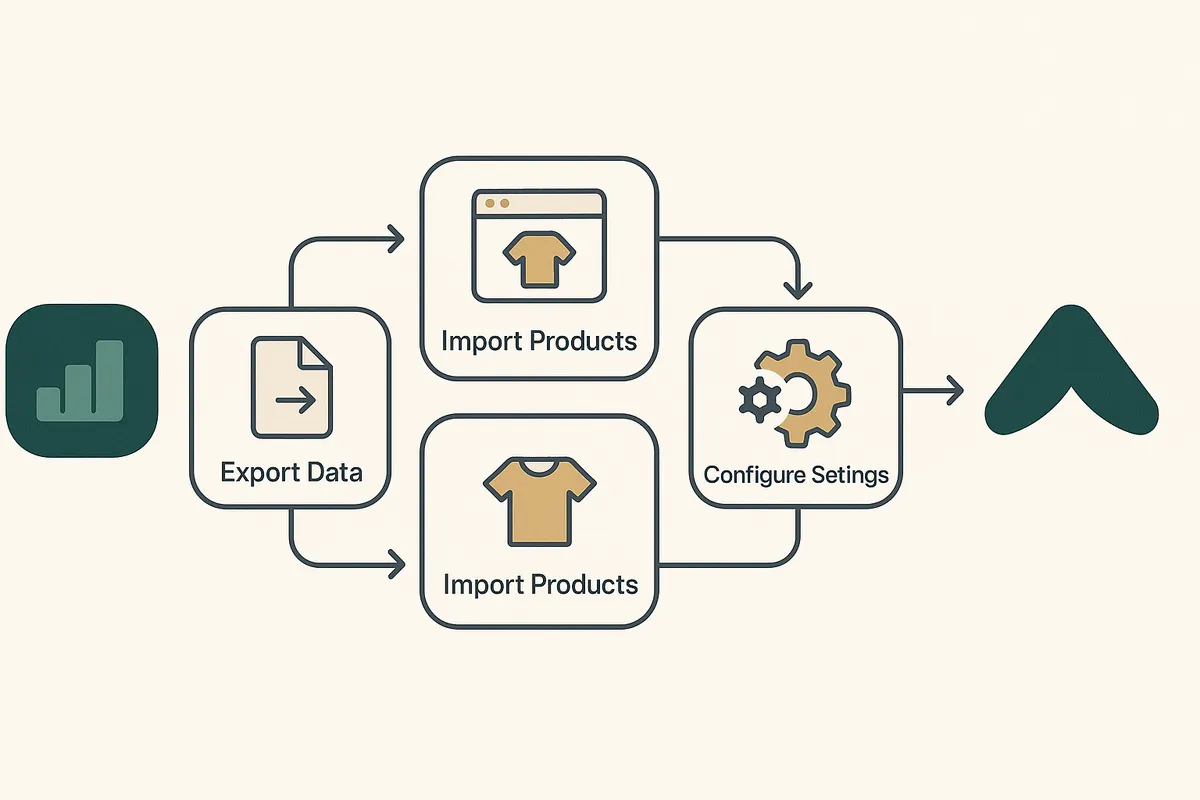
- Export all purchase orders from Stocky as CSV — go to Stocky > Purchase Orders > Export. Do this now, even if you're not ready to migrate yet. Once Stocky is removed, this data is gone forever.
- Export your supplier list — Stocky stores supplier details separately from Shopify. Copy supplier names, contact emails, lead times, and payment terms into a spreadsheet.
- Document your current reorder points — if you've set up any reorder triggers in Stocky, note the SKU, threshold quantity, and supplier for each one.
- Audit your actual lead times — Stocky let you set lead times per supplier, but most merchants set these once and never updated them. Check your last 5 POs per supplier and calculate the real average lead time.
- Choose a replacement tool — evaluate based on your SKU count, number of suppliers, and whether you need demand forecasting or just purchase order management.
- Run both systems in parallel for at least 30 days — don't cut over in one go. Run your new system alongside Stocky and compare the purchase order suggestions.
Comparing the best Stocky replacement apps
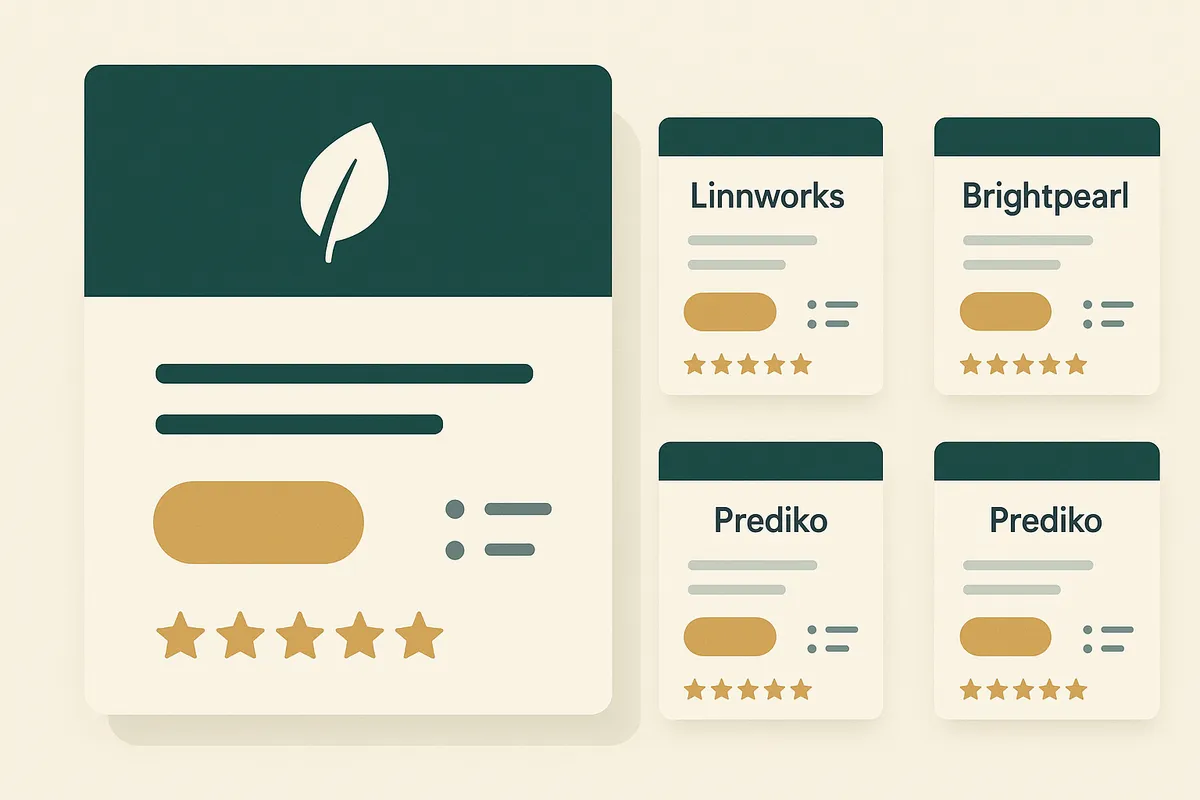
There are three serious contenders for Shopify merchants migrating away from Stocky. Each has different strengths depending on your business size and complexity.
Inventory Planner is the most established option. It's been around since 2015 and has strong demand forecasting with seasonal adjustments. Pricing starts around £100/month for smaller stores but scales to £300+ for larger catalogues. The main criticism is complexity — the interface assumes you understand inventory management terminology, and the onboarding can take weeks.
Prediko is newer and more design-forward. It's popular with DTC brands and has a clean interface that's easier to learn. However, it's less suited to businesses with complex supplier networks or multi-step production processes. Pricing is similar to Inventory Planner.
Canopy (currently in development) is being built specifically to address the gaps that Stocky left. It focuses on weeks cover as the core metric, includes supplier lead time modelling, and is designed for brands with large SKU counts and long supply chains. The interface is built for founders and ops managers who don't have inventory management degrees. Early access pricing will be significantly lower than both Inventory Planner and Prediko.
Why this could actually be a good thing
Stocky being retired forces a conversation that most Shopify merchants should have had years ago: are you actually managing your inventory, or are you just creating purchase orders and hoping for the best?
Proper inventory management means understanding your weeks cover for every SKU. It means knowing which products are dead stock before they've been sitting for 12 months. It means having reorder points that account for real supplier lead times, not the optimistic numbers your supplier quoted you two years ago.
Stocky couldn't do any of that. Its replacement should. Whatever tool you choose next, make sure it gives you visibility into the metrics that actually prevent stockouts and reduce carrying costs — not just a digital notepad for purchase orders.

Frequently Asked Questions
Shopify has confirmed Stocky will be fully removed from all stores on 31 August 2026. After that date, you will not be able to access the app or any data stored within it.
Yes. Any purchase orders, supplier data, and demand forecasting history stored exclusively in Stocky will be inaccessible after the shutdown. You must export this data as CSV before 31 August 2026.
There is no direct free replacement with the same functionality. Shopify's native admin handles basic inventory tracking but does not include purchase orders or demand forecasting. The most affordable paid alternatives start around £50-100/month.
Yes. Shopify's core inventory tracking — stock levels, inventory adjustments, transfer management between locations — is built into Shopify admin and is not affected by Stocky's shutdown. What you lose is purchase order management, supplier management, and demand forecasting.
At minimum 30 days, ideally 60-90 days. This parallel period lets you verify that reorder suggestions, demand forecasts, and stock level calculations match your expectations before you rely on the new system entirely.
Canopy is currently in development and accepting waitlist sign-ups. It is being built specifically for Shopify brands that need weeks cover tracking, supplier lead time modelling, and purchase order management — the core features Stocky is losing.
Related pages
Related Articles
Weeks Cover in Stock Management: Formula, Examples & How to Use It
Weeks cover tells you how many weeks your current stock will last at the current sales rate. Learn the formula, what good weeks cover looks like, and how to calculate it for thousands of SKUs.
Shopify Inventory Management in 2026: What's Built In, What's Missing & What You Actually Need
Shopify's native inventory features have improved, but critical gaps remain. This guide covers what Shopify can and can't do for inventory management, the best apps to fill the gaps, and how to build a system that scales.

Dead Stock in Ecommerce: How to Identify, Calculate Cost & Eliminate It
Dead stock costs the average Shopify merchant 20-30% of their inventory value. Learn how to identify dead stock, calculate the true carrying cost, and build clearance strategies that recover cash.
Get early access to Canopy
The inventory system built for Shopify brands. No spam — just a heads-up when we launch.